News from Shalstone


   More information regarding Shalstone HERE

Thanks to our village bakers for their generous donations of cakes, and to Amanda and Andrew Anderson for organising refreshments at the spring coffee morning in the Reading Room. Nearly £250 was raised for Reading Room funds.

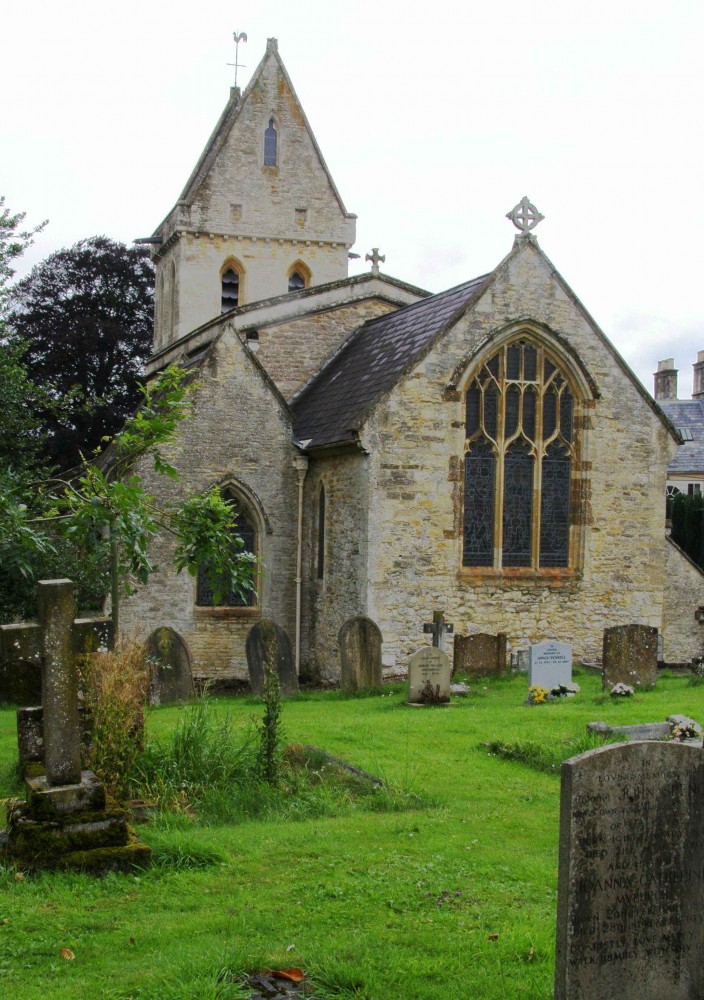
The first service in June will be the popular pet service. Please come along to the churchyard with your furry friends, to celebrate the joy, companionship and love that pets bring into our lives. Catch up with fellow pet owners and enjoy songs, prayers, stickers and treats for pets and people.

Services coming up in church

  • Sunday 7 June – 2.30pm Pet Service
  • Sunday 5 July – 10.30am Family Communion
  • Sunday 2 August – 9.00am Village Worship


Church cleaning

  • June - Elspeth and Trisha
  • July - Amanda and Kathy
  • August – Fiona and Janet

Cogitations…The Old Codger aka GPP


The Indian Cow

At the bottom of the garden, on the other side of the lake is a memorial looking rather like a tombstone which, in fact, it is!  It is the memorial to Emma, the Indian Cow. In the 1800s, the elder son of a country estate would stay behind to learn how to look after the property. The second son joined the army and, because there was no Northern Ireland or Germany to play soldiers in, they had to go to India. Inevitably, when in India, their hearts began to beat rather more rapidly. There were a lot of pretty senior officers’ daughters, looking about for a possible partner. They were soon married, followed by the birth of a baby. Because young soldiers were not allowed to be married at that time, they were sent back home. The trip took six weeks. In those days it was considered “not nice” for girls of that sort of age to breast feed babies so it was the custom to buy a freshly calved cow – there were plenty of them in India. The cow was taken on board and someone would milk it every morning to provide fresh milk for the baby. When they arrived back in Portsmouth, they realised that they hadn’t thought things through to the end and wondered what on Earth to do with their cow! They sent it off to Great Grandmother, who lived at Shalstone and, therefore, had a field to put it in. When Emma arrived at Fulwell railway station, there was a certain amount of consternation because she had a large lump at the top of her back. The vet was called and a poultice applied to try to reduce the swelling but, finally, it was established that Indian cows always have a lump and this was perfectly normal! Emma was walked from the railway station to the Manor and lived for a further twenty-three years. She died in 1873 and the memorial was erected at the bottom of the garden.

A Time to Reap by WJC Hilsdon

Summer is the favourite season for many, the shining months of warmth and longer days characterized by growth and abundance. Swallows returned in April bringing the promise of summer, and when the swallows leave in September summer will have ended. Changing seasons and natural cycles remind me of Pete Seeger’s song, ‘Turn Turn Turn,’ inspired by the Book of Ecclesiastes and made famous by The Byrds.  People generally think of August as being the traditional month of harvest when ripened grain is gathered, but the harvesting of crops takes place over many months. Fields of grass for early cuts of silage have already been cleared, hay, oilseeds and cereals will be taken in July and August, maize and potatoes in early autumn, each crop in its due season. The time to reap will come when nature decides, when maturity is complete and when the weather is suitable. Now, in early summer, farmers can start to see the efforts of a year’s work coming together on the journey to harvest. Rising crops and thriving livestock are in harmony with the profusion of growth in the natural world, the regeneration of wild plants, hedges and trees is all happening as flora and fauna strive to reach maturity and reproduce before winter comes.

Outdoor living is pleasant just now and in gardens people are reaping the fruits of their labours. The pleasures of eating home grown produce or perhaps giving some away in gestures of friendship, and enjoying the colours and scents of flowers and shrubs are widely known. Gardeners, farmers and countryside lovers are well aware that nature constantly changes day by day, you need to savour every moment, nothing lasts for long. Summer is the time for relaxing a little and perhaps the time to visit other gardens. One of the world’s most important landscape gardens, Stowe, is on our doorstep and those who enjoy walking in the wonderful scenery are reaping the rewards of the imagination, foresight and skill of the men who created marvellous landscapes like Stowe hundreds of years ago.  

Recent wet winters and dry summers have caused farm crops to suffer from periods of waterlogging followed by drought, resulting in some poor harvests. Last year was no exception, yields were disappointing following months without rain. Farmers, usually full of optimism, were subdued. There was none of the usual post-harvest feeling of well-being, no desire to celebrate. You could almost sense the gloom floating across every farmyard like thistle seed in the air. Climate change is now undeniable and is influencing future farming policy. The crops on our farm this year are destined for three distinct end uses. Wheat and beans are being grown for human consumption, for breadmaking and as a protein ingredient respectively; maize will be used as an energy crop to produce bio-gas which will be piped into the National Gas network supplying homes and power stations, whilst in some fields seed-bearing mixtures of flowering plants will provide food for wild birds in winter and shelter for insects and small mammals. Arriving at these planting decisions caused some agonising, is it right to commit fertile land to energy crops and flowers when the world needs food? I reasoned that the fields in question can easily be returned to growing food in future, non-food crops are only temporary. According to Ecclesiastes all life is ephemeral; we should live simply, enjoy the moment and accept that the future is unknown. For everything there is a season, and a time to every purpose under heaven.


Powered by Church Edit